
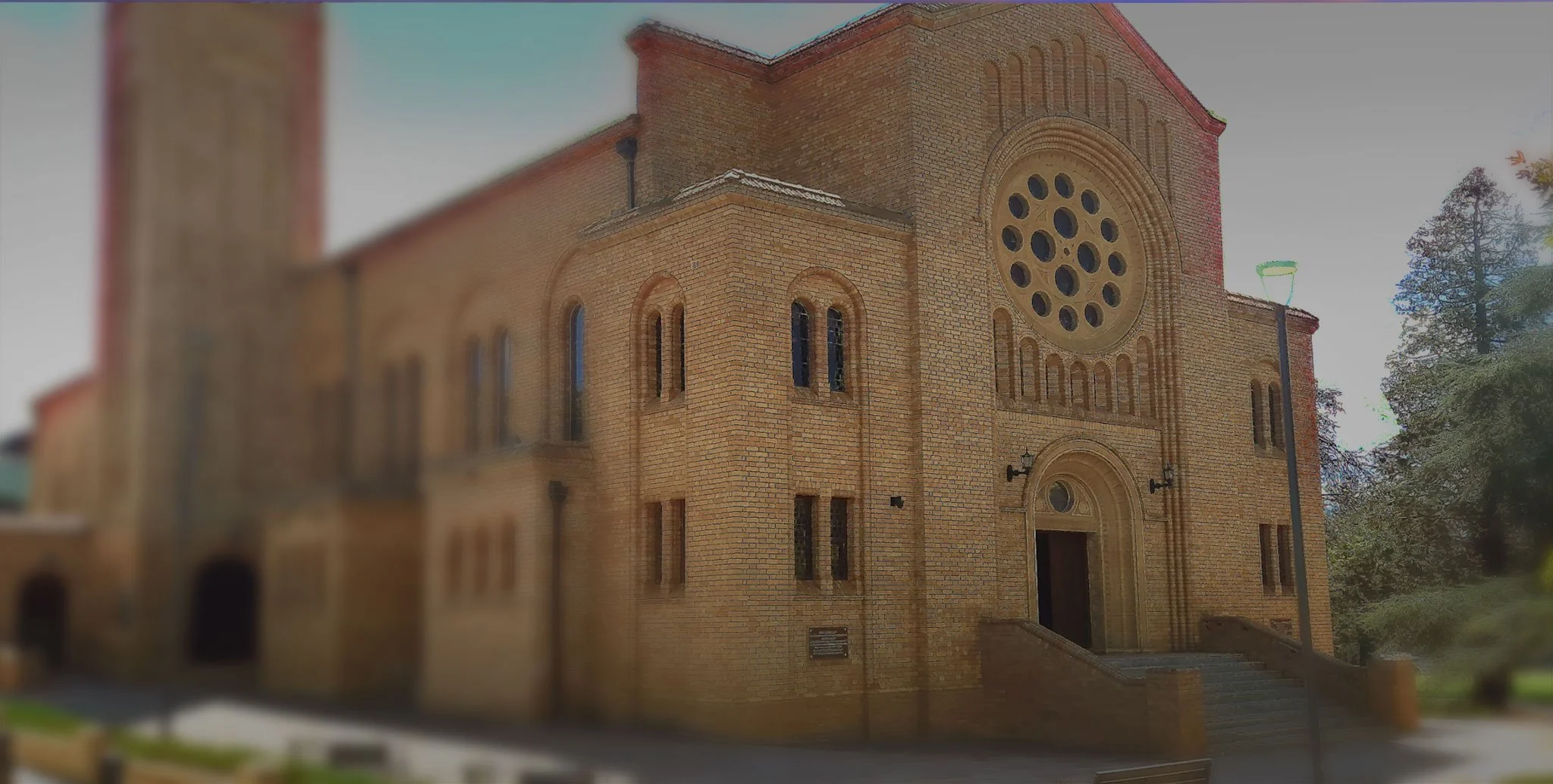
St Christopher’s Cathedral Parish Manuka, ACT
Cathedral Heating System Upgrade
Project Overview
Project Name:
St Christopher’s Cathedral Heating System Upgrade
Location:
Manuka, ACT, Australia
Client:
St Christopher’s Cathedral Parish (Archdiocese of Canberra & Goulburn)
Project Type:
Heating System Upgrade | Heritage Building | Concept Design & Tender Documentation
Project Background
Built in 1972 and designed by architect Clement Glancey, St Christopher’s Cathedral is a heritage - listed building and a significant landmark in Canberra.
The original heating system consisted of 60 under - pew electric convector heaters, which had failed over the years. There were also safety concerns associated with hot surface contact and potential fire risks. Due to the significant height and volume of the building, convective heating is neither effective nor efficient, and replacement heaters required to be imported from England, would be prohibitively expensive.
Several years ago, the under - pew heaters were disconnected, and medium - frequency infrared heaters were installed on the walls, angled towards the congregation. Due to the lack of automatic controls, the heaters were manually switched on shortly before services, which was insufficient time to adequately warm the nave. In addition, the type of heaters installed had lower efficiency in projecting heat downwards, resulting in significant heat loss as warm air rose to the upper areas of the nave above the congregation.
During winter, the Cathedral was reported to be extremely cold and uncomfortable, and attendance was declining, which was a concern for Father Paul Nully, Parish Administrator of St Christopher’s Cathedral.
Role of ESBS
ESBS was engaged as the mechanical and electrical engineering consultant to review the existing heating system, identify constraints associated with the heritage building, and develop a suitable heating solution. This included preparation of concept design options, system selection, and indicative cost estimates to support decision - making by the Parish.
Key Challenges
Heritage-listed building constraints
Large volume and high thermal mass
Intermittent occupancy patterns
Inefficient and poorly controlled existing system
Electrical infrastructure limitations
Budget constraints
Outcomes
ESBS assessed and developed a heating upgrade solution addressing comfort, efficiency, and budget constraints.
Following detailed site investigations and engineering assessment, ESBS identified that a short - wave radiant heating solution would provide a more effective outcome. Unlike long - wave systems, short - wave radiant heaters deliver immediate heat directly to occupants and surfaces, making them well suited to intermittently occupied spaces. An automatic control system was incorporated to allow appropriate warm - up prior to services.
The proposed solution:
Provides instantaneous heating by directly warming occupants rather than the surrounding air
Improves comfort during short - duration services without long pre - heat times
Enhances heat targeting across seating areas within the nave
Reduces energy wastage associated with heating large air volumes
Minimises intervention to heritage fabric through strategic placement
Aligns with electrification and modern control strategies
ESBS progressed the design through to tender stage, issuing coordinated tender drawings and schedules for the nave heating upgrade. This provided the Cathedral with a clear, buildable solution ready for procurement.
As part of the investigation, ESBS also assessed the condition of the main switchboard and incoming service mains, comprising original steel wire armoured cabling reportedly containing asbestos. Replacement of this cable would be highly disruptive and costly, as it traverses Franklin Street and would require works within the public domain.
A practical recommendation was developed to install a link box with a manual transfer switch, minimising cost and disruption while reducing impact on the heritage fabric.













Let’s Discuss Your Project
Whether you are planning a new development, upgrade, feasibility study or building services review, ESBS can provide practical engineering advice and tailored consultancy support.